Daylily hybridizer spotlight: Bruce Kovach
How a hybridizer chooses what to cross
Bruce Kovach stressed the value of having color contrast in gardens. Seeing different colors side by side sparks ideas for new crosses. He cautioned to focus on improving one or two traits to keep hybridizing objectives clear.
Kovach started hybridizing in Michigan with a simple goal in mind: improve the consistency of doubling in Daylilies.
When he moved to Georgia he amped up his hybridizing efforts toward cultivating doubles with teeth. At the time, only one double from Wisconsin had showed significant teeth. Under the mentorship of fellow hybridizer Lee Pickles, Kovach was informed of the following guidelines:
If you have fewer than five seedlings, discard it.
If you do not have one of the parents, discard it.
Kovach broke those rules and had several with only one known parent become just as outstanding. To stay organized, he emphasized maintaining a system for collecting data, as hybridizing genealogy demands record keeping.
In the South, his crosses showed he could enhance color and add teeth to double Daylilies.
Years of experimentation taught him that crossing a pollen parent (present teeth) with a pod parent(absent teeth) most likely produces offspring with teeth, but it is entirely dependent if both parents have some doubling in their genes. The next question became: how long should the teeth be? Are they too long? Will they interfere in opening properly? Hybridizing thrives off questions enabling hybridizers to reshape their focus once an initial goal is met— behold, the hybridizing rabbit hole.
Along with pigment and ruffling, Kovach inspected his blooms for stiffness or in some cases cracked a petal to determine good texture. A hardy plant is key for a Georgia hybridizer battling weather elements such as rain, wind, direct sun, etc. If a daylily looks you in the face at 6p.m. the same as it did in the morning, you have a winner.
Registering a cultivar with the American Hemerocallis Society Daylily Database is what Kovach calls a double-edged sword. Kovach has registered 78 cultivars—40 in 2025 alone. Registration tied his name and reputation to the cultivar and his goal is for growers to have excellent garden performance with one of his introductions.
An alternate method to growing Daylilies
Kovach discussed the process of growing Daylilies in water beds:
introduce seeds to diluted hydrogen peroxide solution (7-10 days to germinate)
attach liner to the inside of the bed
fill with one inch of water
insert plants
(every few weeks) add Dawn soap directly to the water for mosquito management
Water beds can be constructed in a greenhouse or on a flat surface outside. The former provides a controlled environment, if not, note heavy rain, slopes, and pests can alter the bed’s composite integrity. No matter the location, growers can benefit from using raised water beds as a less extensive start to cultivating Daylilies.
Originally from Cleveland, Ohio, Kovach resided in Texas and Michigan before settling in Georgia. In 2003, he began a hybridizing pursuit that spanned more than two decades and included as many as 11,000 plants.
“It gets out of hand fast,” Kovach said. “Do not start hybridizing unless you are ready to be addicted.”
When asked about the next generation of hybridizers, Kovach encouraged those to seek mentorships and ask questions. He concluded with the following anecdote,“ Preceding the passing away of Lee Pickles, I spoke with him about initially having many questions and not wanting to bother him— to that Pickles responded, I would have answered each one.”
Botany Terms:
Hybridize - (v) to cause to produce hybrids, an offspring of two plants of different varieties
Sepal- outer floral segments that protect the developing bud and support the petals
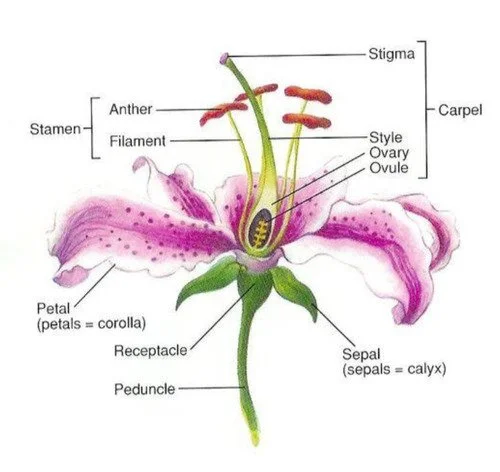
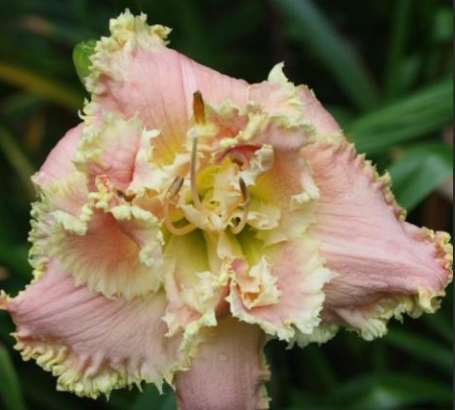
Double- a flower with extra petaloid tissue beyond the normal three petals and three sepals
Teeth- serrated ‘tooth-like’ edges found on petals
Genealogy - of a plant’s line of evolutionary development from earlier forms
Pod Parent- plant that contributes female reproductive cells, receives pollen and forms pods where the fertilized seeds develop
Pollen Parent- plant that contributes male reproductive material (pollen)
Cultivar- a specific clone or variety of the plant
Germinate- of a seed, begin to sprout or develop
